Most of this book is about extracting edge from quantitative data - prices, volumes, fundamentals, calibrated probabilities. There is also an edge that comes from the way humans behave under uncertainty. This chapter covers behavioural edge: the systematic departures from rationality that create persistent opportunities for a disciplined systematic strategy to exploit. Behavioural edge is durable for a paradoxical reason. The behaviours are documented in academic literature, replicated across decades and markets, and known to every quant fund. By any normal logic, the edge should have been arbitraged away. It has not, because the very biases that create the edge prevent most market participants from acting against them, even when they know the research. Knowing a bias exists and being able to override it in the moment are two very different things.
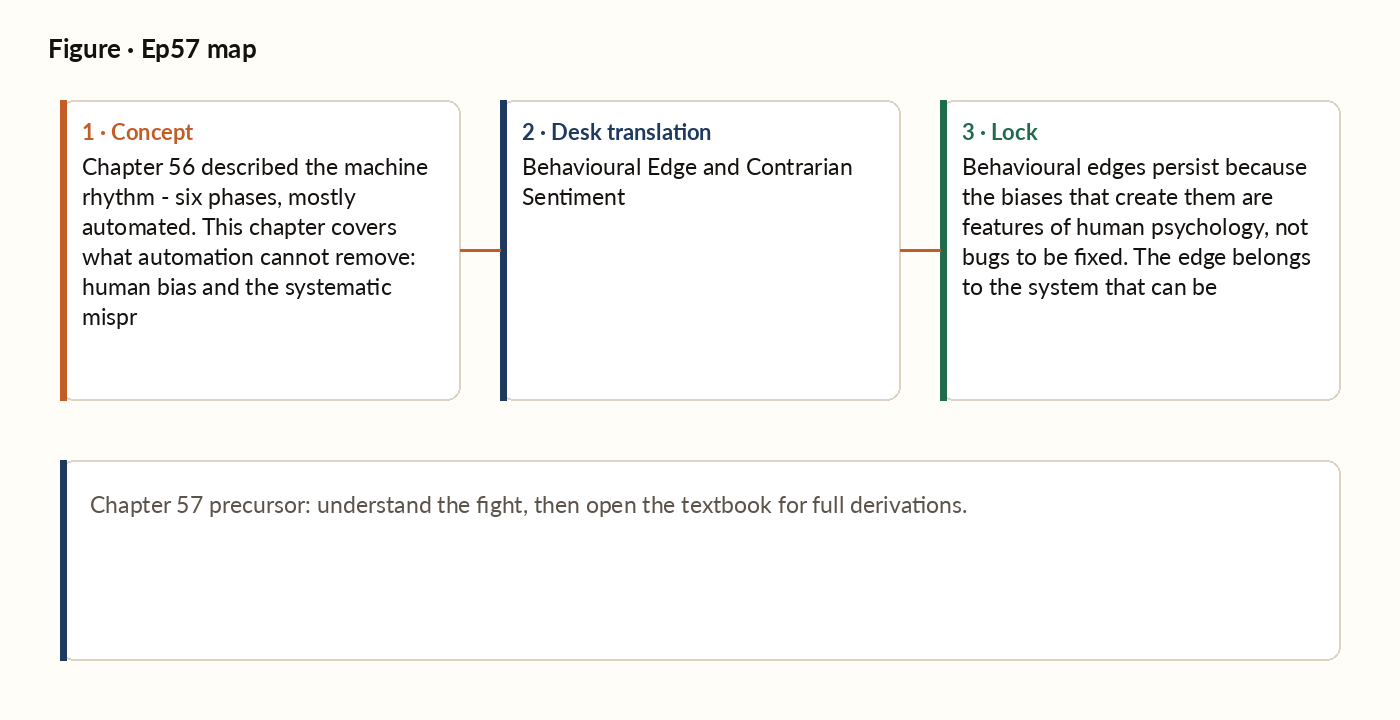
Figure 1. Concept map for this episode: fight, desk translation, what to lock.
The behavioural premia
Three well-documented behavioural patterns persist in equity markets. Momentum: stocks that have risen continue to rise, and stocks that have fallen continue to fall, for medium-term horizons of one to twelve months. The explanation is partly behavioural: investors under-react to news in the short term, so the price moves less than it should given the news, then over-react in the long term, so the price eventually moves more than the fundamentals justify. The one-to-twelve-month horizon captures that under-reaction phase, and it has been documented in finance literature since at least Jegadeesh and Titman's 1993 paper. Mean reversion is momentum's short-horizon mirror: stocks that have moved an extreme amount over just one to five days tend to partially reverse, driven by liquidity-providing market makers who briefly accommodate an excess order flow and then unwind that position, pushing the price back toward fair value once the imbalance has passed. The disposition effect is a third, distinct pattern rooted in loss aversion rather than price dynamics: retail traders are reluctant to sell losing positions, because realising a loss feels worse than merely holding one, and quick to sell winning positions, because locking in a profit feels good. That asymmetry creates persistent selling pressure at price levels where many traders are underwater, and persistent demand-soaking at levels where many are already profitable — a microstructure effect a disciplined systematic strategy can trade against precisely because it never feels the loss aversion driving it.
The contrarian sentiment signal
A more recent behavioural pattern: extreme retail sentiment is often a contrarian indicator. When retail discussion of a stock spikes dramatically with overwhelmingly bullish sentiment, the stock often underperforms over the following weeks. The mechanism: retail enthusiasm peaks near short-term tops; the price has already incorporated the bullish narrative; subsequent flows turn negative as the early-entry traders take profits. The retail bull arrived last; once they have arrived, there is nobody left to buy at higher prices, and the stock simply drifts back down.
Worked picture
Suppose a contrarian setup has a 54% estimated win rate, a win/loss size ratio of 1.5, and friction costing 0.10R. The gross edge works out to about 0.35R per trade; after friction, the net edge is 0.25R. Full fractional Kelly might suggest sizing this at 0.8% of equity; behavioural variance warrants half-Kelly → 0.4%. The edge is real but thin - size for variance, not for narrative conviction.
What breaks in production
A common error in contrarian trading: spotting an "obviously" euphoric stock and shorting it immediately. The problem is that retail euphoria can persist for months before the inevitable reversal. The early contrarian short pays painful holding costs and is often stopped out before the thesis works. The discipline: wait for the trigger. The contrarian setup is not "sentiment is extreme, short now." It is "sentiment is extreme AND the price has confirmed a top by closing red on the first major down day." Without the trigger, you are betting against momentum that can last longer than your risk tolerance. Keynes's old line applies precisely: the market can stay irrational longer than you can stay solvent. The waiting-for-the-trigger rule is the operational answer.
Key idea
Behavioural edges persist because the biases that create them are features of human psychology, not bugs to be fixed. The edge belongs to the system that can be disciplined - that can do the opposite of what feels emotionally correct, by automating the decision away from the human in the loop. Knowing about the bias is the easy part; the hard part is building a system that ignores it consistently.