This chapter walks through one trading day the way the rest of the book is meant to be read: not as a checklist of commands, but as a story that compresses into structure. You will meet the same ideas - expected value, calibrated probability, friction, fractional Kelly, convergence, regime halts - in concrete moments first. Only later does the abstraction appear, the way "2+2+2" and "2×3" both describe the same number by different routes. The operator in this walkthrough runs a systematic swing book with a smaller session book and an options overlay. Nothing here names a broker, a product, or a repository. Every habit is portable.
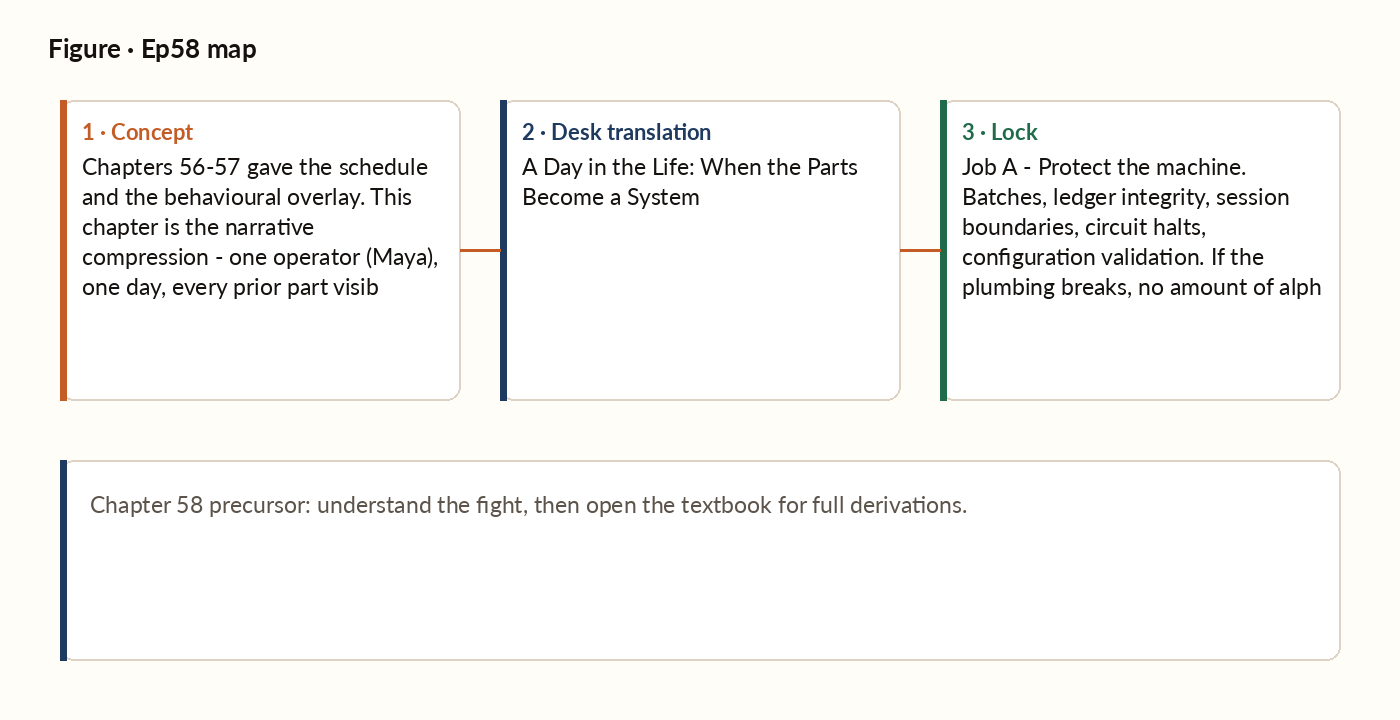
Figure 1. Concept map for this episode: fight, desk translation, what to lock.
Before the open — the six-minute ritual
The ritual runs in four steps, in order, every session, whether the prior day was good or bad. First, read the morning verdict: a single traffic-light summary of Job A, green, amber, or red. Second, glance four metrics: calibration bucket, gate pass count, convergence status, capital deployment against target. Third, confirm promotion gates: is anything still blocked on too few labeled outcomes to trust? If yes, hold parameters as they are — do not "fix" a model by hand because a number looks stale. Fourth, on names that already passed yesterday's gate, skim beta and idiosyncratic context: is today's move market-linked or genuinely name-specific? If the verdict itself comes back red — a stale batch, a failed configuration check, a broken ledger join — the operator runs recovery from the standing runbook and does not trade around a broken pipeline, no matter how obvious the day's setup looks. A batch that failed overnight because one fee tier was missing from the friction table is a tempting moment to "just take the obvious gap-up manually." The discipline holds anyway: a manual fill with no persisted probability, feature hash, or friction snapshot poisons tomorrow's calibration. An empty day beats a dishonest ledger.
Pre-market — discovery, gate, plan seed
Overnight and early morning, the data plane warms: cleaned prices, macro compiles, news context read as background, never as an entry signal on its own. The operator reads the news pulse and macro calendar but does not pick tickers off a headline. A specialist language model, fine-tuned and gated per the book's LLM chapters, summarises the overnight filing queue and flags a handful of names for closer reading — but those summaries earn their place in the morning panel the same way any other feature does, by clearing the same expected-value gate everything else clears, not by skipping it because they arrived as prose. Then the discovery chain runs on the screened universe in four stages: the feature panel (what did each name look like at decision time?), the scorecard (what is the estimated win probability and net expected value after friction?), the gate (who passed the minimum edge and risk filters?), and the plan builder (for survivors: stop, target, size tier, and the probability estimate persisted for later scoring). Every probability the scorecard produces is deliberately clamped well short of 0 or 1 — the book's standing defence against certainty theatre. In the last twenty minutes before the open, the operator confirms gate artifacts are dated today, opens the top names in research view to see why the scorecard liked them, and treats any agreement across independent methods as a hypothesis worth a second look, never an automatic buy. Names the gate already dropped do not get added back because they look good on a chart — that bypasses the expected-value math and poisons the labeled-outcome record the whole system depends on.
Refinement — where a buy earns the right to exist
A name passes the gate with an estimated win probability of 0.58 and a planned reward-to-risk of 2.5 to 1. Gross expected value in R-multiples is 0.58 times 2.5, minus 0.42, which is 1.45 minus 0.42, or 1.03R. Measured round-trip friction for a mid-cap delivery swing runs about 0.12R, so net expected value after friction is 1.03 minus 0.12, or 0.91R — well above a typical no-trade floor of 0.08R. The name passes the arithmetic; refinement now tests portfolio caps, not whether the edge exists on paper. Suppose full Kelly sizing implies 1.2% of equity, but the sector sleeve allows only 0.6% — the builder assigns 0.6%. If the minimum economically meaningful size is 0.8%, the name is dropped outright rather than sized down further: an empty slot beats a half-sized lie sitting in the ledger. If a circuit-stress flag is true instead, the same rule applies, no override, no exception for a name that "feels" safe. The ledger stays honest. An empty plan is a normal day; empty beats forced trades.
Pre-flight and the open
Minutes before the session, automated pre-flight checks run: limit-band proximity, configuration sanity, and clearing any stale halt files left over from a prior session. Orders queued overnight fill at the opening print, not at the price they were submitted against the evening before — unrealised profit and loss only begins accumulating from that actual fill. The execution log gets watched in real time: which opening fills confirmed, and which discretionary adds the automation itself refused. If the plan did not add a name, the reason is always either the expected-value gate or a portfolio constraint saying no — never an oversight to second-guess.
Intraday — halts, discipline, square-off
On stress days the system may block new adds near exchange limits, and the macro pulse keeps updating through the session — but there is no discretionary re-entry after a halt until the next morning's pre-flight runs again. Circuit logic is deliberately asymmetric: easy to trip, slow to reset, because re-entering into the second hour of a shock stacks correlated losses on top of each other. One missed bounce is a smaller cost than one blown week. The discipline never widens a stop because "it will come back" — doing so is how a planned 1R loss quietly becomes an unplanned 4R loss, and it breaks the calibration record along with the trade. Session-book positions square off before the close by rule, not by hope, every single day.
Close — journal, not opinions
After the close, marks freeze and post-close scans may run. Every closed or still-open line keeps its feature hash and entry-time probability estimate on an immutable event log — the record that makes tomorrow's calibration honest. The close-out compares the day's open positions against the morning's plan and counts session squares; there are no end-of-day revenge trades. If tomorrow's queue holds anything, it comes from tonight's evening batch, not from today's frustration. Every exit is plan-driven — stop, target, time, or scheduled square-off — because improvement is supposed to come from better entries and better sizing, never from a heroic discretionary sell.
Evening — where profit improvement actually compounds
The evening chain is Job B's entire factory, and it runs in five steps: refresh labeled outcomes with a strict point-in-time join so every closed trade gets its realised return; recompute dynamic features like beta and idiosyncratic exposure; run walk-forward tuning and gate passes that promote scorecard weights only once at least twenty labeled outcomes exist and the information coefficient clears its threshold; combine residual signals and feed convergence inputs; and queue next-session orders from today's closed, labeled artifacts — never from intraday emotion. The highest-return twenty minutes of human time in the whole day go into five checks: has the edge-verification card's mean return and significance moved? Is any feature newly gate-eligible for promotion (rare, especially early on)? Is the labeled sample size per setup class still too small to safely tune anything below twenty observations? Did the automation log a clean, complete run? And one honest question — did the desk take any dumb risk today, the wrong book, a limit chase, a manual override? If the answer is yes, the fix is to the process, never to tomorrow's ticker list. None of this promotes model weights or enables a new overlay because one single day happened to go well or badly — that is precisely how overfitting starts.
On a day the broad index drops 1.8% mid-session, the disciplined version of this system does almost nothing interesting: stops fire exactly on plan, 1R each, never a panicked 4R; no new entries open after the halt logic trips; the session book squares at its scheduled time while the swing book holds only whatever already passed the morning's expected-value gate; and the evening batch still writes its labeled rows, because one bad day does not halve position sizing forever while the sample is still building. Without circuit discipline and real queue semantics, the same day turns into what the book calls 25R of narrative trading, followed by permanently undersized positions born of panic rather than evidence. The entire framework exists so that a genuinely bad day produces nothing more dramatic than a clean, boring, statistically interpretable line in the ledger.
What the operator never does
Seven habits stay off the table regardless of how confident the day feels: buying outside the automation after the gate already dropped a name; overriding a stop or holding a loser "until it recovers"; raising a probability estimate or Kelly size because a trade "feels" right; promoting a feature without the gate's information-coefficient and sample-size bar being met; forcing session-book size into the swing book or the reverse; trading through a red Job A verdict; and changing the capital split mid-measurement. Each one either destroys the R-multiple math directly or contaminates the labeled-outcome record that every later decision depends on.
Two jobs, every day
Job A — protect the machine. Batches, ledger integrity, session boundaries, circuit halts, configuration validation. If the plumbing breaks, no amount of alpha matters. Job B — improve the loop when the data says so. Brier drift, edge-verification card, feature significance, walk-forward gates — change weights or overlays only through labeled outcomes, never from one green or red day. Overnight, jobs may refresh model training corpora on verified seeds and run scheduled walk-forward allocators; nothing is required of the operator until the next morning's six minutes begin again. Edge compounds in sample size, not in drama.