Walk-forward is the most rigorous backtest methodology in common use. It explicitly simulates the production scenario: at every point in history, the model has access only to data that would actually have been available, parameters are re-tuned periodically as new data arrives, and the reported performance is the concatenation of out-of-sample performance windows that the model never saw during its parameter tuning. A strategy that survives a properly designed walk-forward has earned the right to be considered for deployment. A strategy that fails walk-forward - even if it looks brilliant on a one-shot backtest - has not.
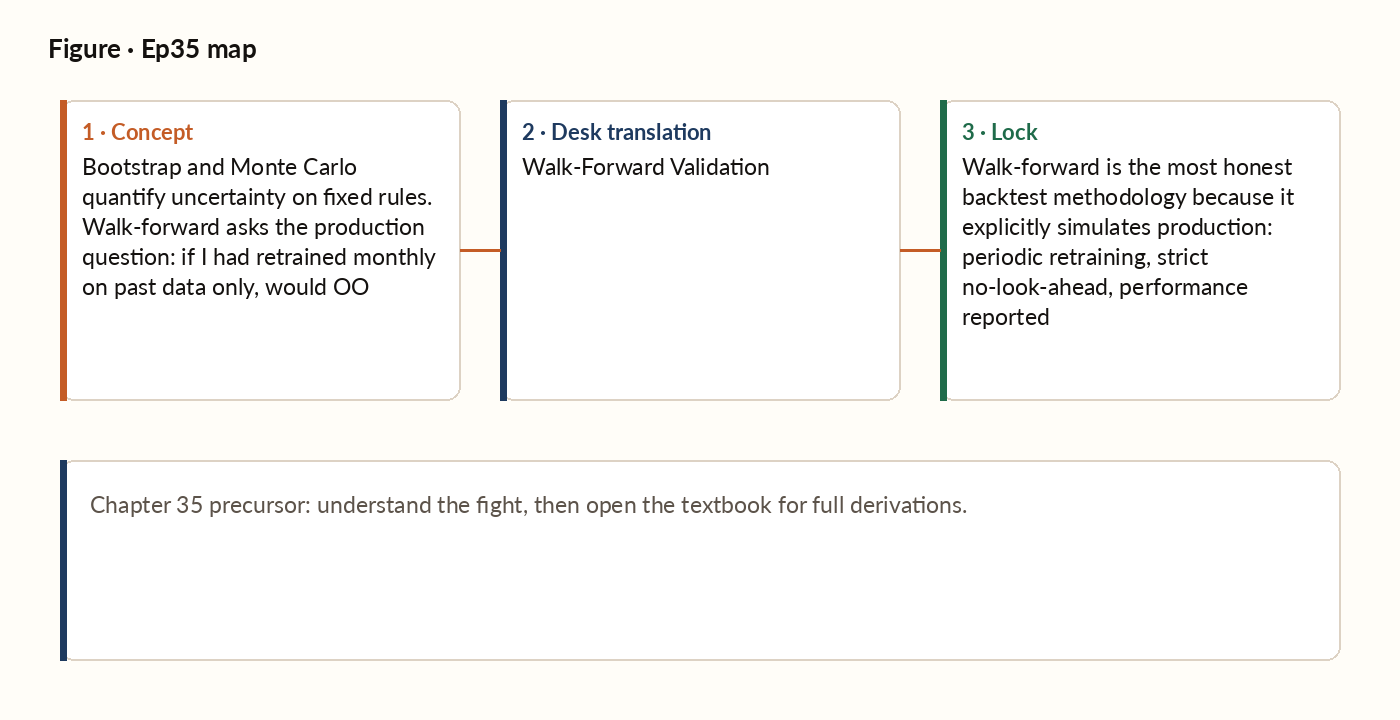
Figure 1. Concept map for this episode: fight, desk translation, what to lock.
The walk-forward protocol
1. Choose an initial training window length (e.g., 24 months) and a test window length (e.g., 3 months). 2. Train the model on months 1-24. Test on months 25-27. Record the out-of-sample performance. 3. Slide the windows forward by the test-window length: train on months 4-27. Test on months 28-30. Record. 4. Continue until the data is exhausted. 5. Concatenate the out-of-sample test windows into a single out-of-sample performance series. Report Sharpe, drawdown, etc., on this concatenated series.
Anchored vs rolling
There are two variants of the walk-forward protocol. Anchored walk-forward: the training window always starts at the beginning of the data; only the end advances. The training set grows over time - train on 1-24, then 1-27, then 1-30, and so on. Rolling walk-forward: the training window slides forward with a fixed length instead, so older data drops out as newer data comes in - train on 1-24, then 4-27, then 7-30. Anchored suits a stable data-generating process, where more data is always better. Rolling suits a process that drifts, which is the common case in finance: older data can be irrelevant or actively misleading, so a fixed-length recent window is the safer training set. Most professional trading shops use rolling walk-forward with windows of 12-36 months for daily strategies.
Hyperparameter tuning inside walk-forward
A subtle but important detail: if the strategy has hyperparameters that need to be tuned (lookback windows, regularisation strength, learning rate), the tuning must happen inside each training window - not once on the whole dataset.
The cost of walk-forward
Walk-forward has a real computational cost: it requires re-training the model many times, which is expensive for ML-heavy systems. It also reduces the effective sample size for any single parameter tuning, because each tuning only uses one training window. For linear models (logistic regression, regularised regression, gradient boosting on small panels), walk-forward is essentially free - re-training takes seconds. For deep neural network models, the cost can be significant; a typical compromise is to walk-forward only the deployment decision itself - when to roll out a new model version - while keeping the model trained on the latest fixed window running for the whole test period in between.
Worked picture
Consider a momentum strategy. From 2010-2015, momentum worked well; from 2016-2020, it underperformed (the "momentum crash" period); from 2021 onward, it works again. An anchored walk-forward, training on all data from 2010 forward, would always include the bad 2016-2020 period in the training set. The model's parameters would be pulled toward parameters that worked in the bad period - possibly hurting performance in the good periods. A rolling walk-forward with a 36-month window would, by 2024, be training on data from 2021 onward - entirely within the good regime. Parameters reflect current conditions. Performance is better. For strategies whose efficacy depends on regime, rolling is almost always the right choice. The implicit assumption - that the recent past is more representative of the near future than the distant past - matches financial reality.
What breaks in production
A frequent shortcut: tune all hyperparameters once on the full historical data, then run walk-forward with these fixed hyperparameters. The walk-forward looks rigorous - out-of-sample windows are honestly predicted - but the hyperparameters themselves were chosen with full knowledge of all the data, including the windows that would later be "out-of-sample." This is a subtle form of look-ahead. The fix is nested cross-validation: tune hyperparameters separately for each outer-loop training window. It costs more computation. The cost is the price of honesty.
Key idea
Walk-forward is the most honest backtest methodology because it explicitly simulates production: periodic retraining, strict no-look-ahead, performance reported on data the model never saw during tuning. A strategy that fails walk-forward should not be deployed, regardless of how attractive the single-shot backtest looks.