Imagine the order book has 1,000 shares for sale at ₹100, then 500 at ₹100.05, then 200 at ₹100.10, and so on. You want to buy 5,000 shares. If you submit a market order for 5,000 shares immediately, you eat through the entire visible book - paying ₹100 for the first 1,000, ₹100.05 for the next 500, ₹100.10 for the next 200, and so on. Your average fill price is well above ₹100. You have imposed this premium on yourself by demanding all 5,000 shares right now.
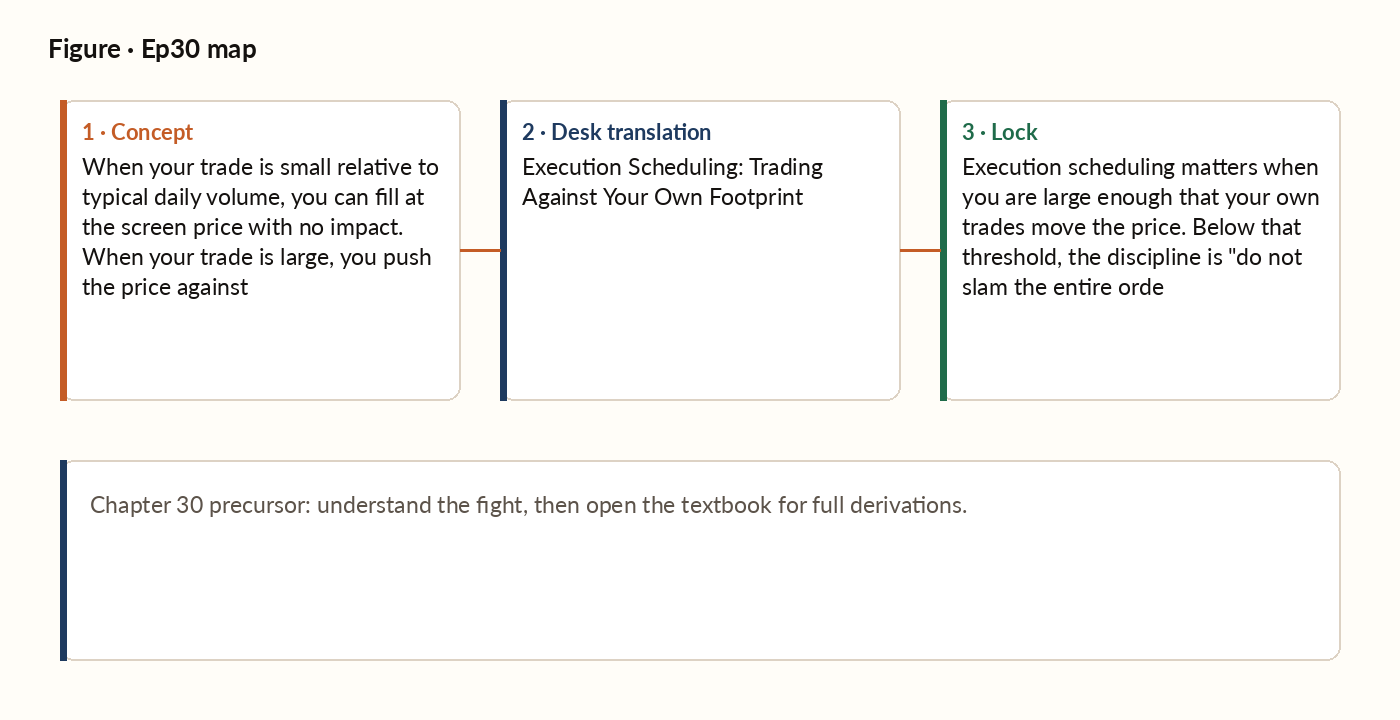
Figure 1. Concept map for this episode: fight, desk translation, what to lock.
Permanent vs temporary impact
Permanent impact is the lasting effect of your trade on the equilibrium price. If you buy a million shares of a small-cap stock, the supply-demand balance has changed, and the equilibrium price moves up. This impact does not decay.
The Almgren-Chriss framework
The classic model for execution scheduling, due to Almgren and Chriss (2000, "Optimal execution of portfolio transactions," Journal of Risk 3:5-39), treats execution as a trade-off between two costs: - Slippage cost: the temporary impact of trading too fast. - Risk cost: the variance of the realised execution price, which grows the longer you take.
The TWAP and VWAP benchmarks
The two industry-standard execution benchmarks are: TWAP (Time-Weighted Average Price): the average price over an execution window, equally weighted across time. A TWAP execution algorithm trades equal-sized pieces at regular intervals.
Definition
Permanent impact measures the fundamental effect of your trade on the equilibrium price - what the price settles at once your order is complete and the market has fully digested it. It is bounded below by the supply-demand shift your order represents. Temporary impact measures the liquidity-friction effect - the additional cost you pay because you demanded immediacy. It is bounded above by the depth of the order book and decays as makers replenish quotes. Mathematical models (Almgren-Chriss, Kyle, Obizhaeva-Wang) differ in how they parameterise these two impacts, but every serious model treats them as separate quantities with different decay properties.
Worked picture
Target: buy 10,000 shares over the trading day. TWAP execution: 10,000 / (390 minutes) ≈ 26 shares per minute, every minute, from open to close. VWAP execution: split based on expected volume profile. If 25% of daily volume typically occurs in the first hour and 20% in the last hour, the algorithm trades roughly 2,500 shares in the first hour and 2,000 in the last hour, with the rest distributed across the middle of the day. Result: VWAP execution typically pays close to the day's volume-weighted average price (the benchmark used by institutional investors). TWAP execution pays close to the time-weighted average, which is usually worse because it under-trades during the high-volume open and over-trades during the low-volume midday. For institutional execution evaluation, VWAP-relative performance is the standard metric. Realising prices better than VWAP is "beating the benchmark"; worse than VWAP is missing it.
What breaks in production
For names with thin volume, blindly following the historical volume profile can be a trap. The historical profile averages many days, but on any individual day, volume can deviate substantially. A VWAP algorithm that aggressively front-loads (because historical volume was front-loaded) into a day where volume actually back-loads will be penalised. The fix: use adaptive VWAP that responds to realised volume during the day, not just historical averages. If volume is running below the historical profile in the first hour, the algorithm should slow down rather than continue trading at the planned aggressive pace. Most production VWAP algorithms include this adaptation as standard.
Key idea
Execution scheduling matters when you are large enough that your own trades move the price. Below that threshold, the discipline is "do not slam the entire order in at once"; above it, the discipline is "use a VWAP-style schedule with adaptive participation and venue diversification." The cost of getting execution scheduling wrong scales with order size - a small mistake at retail scale, a portfolio-destroying mistake at institutional scale.