Per-trade discipline (Kelly sizing, ATR stops, concentration limits) handles the typical per-trade risk. But on bad days, correlated losses across many positions compound in ways no per-trade rule can anticipate. A 10-position portfolio with each position losing 1.5R simultaneously produces a 15R day - much worse than any per-trade rule would allow individually. The daily circuit breaker is the meta-rule that catches these correlated bad days. It does not care which individual trades caused the loss; it cares only about the aggregate. Once the aggregate breaches a threshold, the system halts new entries - preventing the compounding that turns a bad day into a catastrophic one.
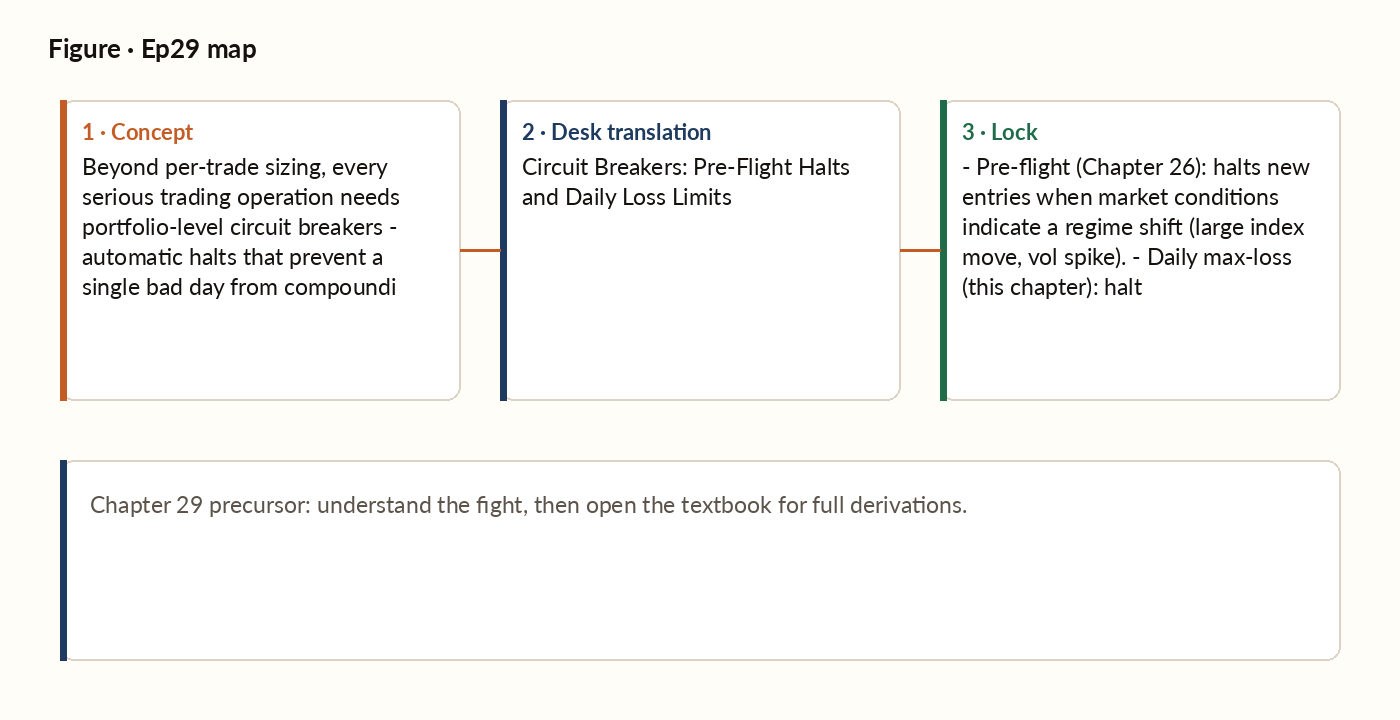
Figure 1. Concept map for this episode: fight, desk translation, what to lock.
The daily max-loss circuit breaker
The daily max-loss circuit breaker halts all new entries once daily realised P&L breaches a threshold. The standard threshold is 2-4% of equity for an aggressive strategy, 1-2% for a conservative one. The logic: if you have already lost 3% on a day, something is happening that your model did not anticipate. Continuing to add new exposure risks compounding the loss. Better to halt new positions, manage existing ones to their pre-set stops, and reassess overnight.
The cooling period
After a circuit-breaker halt, the system typically enters a cooling period - no new entries for a fixed time (a few hours, or until end of day). This prevents the human operator from manually overriding the halt out of frustration and re-engaging risk at exactly the wrong time. The cooling period also gives time for the auto-recalibration machinery (Brier scoring, friction reassessment, vol re-measurement) to update before the strategy resumes. The system that resumes after a halt is structurally different from the one that was halted - it has the benefit of the additional information the halt event itself revealed.
Worked picture
Equity ₹50 lakh; daily halt at 3% = ₹1.5 lakh. Average position risk ₹15,000 (0.3% of equity). A correlated day where eight positions each lose 1.2R works out to about ₹1,44,000, or 2.9% of equity - still below halt. One more similar loss already breaches 3% (₹1,44,000 + ₹18,000 = ₹1,62,000, about 3.2%); new entries stop, existing stops manage out. Without the breaker, the operator might add a ninth position into the same macro shock - each new entry sized on pre-shock and friction estimates that no longer apply.
What breaks in production
The most dangerous failure mode is when an operator who has "designed" the circuit breaker decides, in the moment, that "this time it does not apply." The market has dropped 4% on a Fed surprise; the trade plan was constructed before the Fed; the operator overrides the halt to capture the bounce. This works occasionally. It fails catastrophically more often. The Fed surprise might be the start of a multi-day move, not a one-day overshoot. The "bounce" trade enters into the developing crisis and gets crushed. The principle: if you trust the circuit breaker enough to install it, trust it enough to respect it. Manual overrides destroy the discipline. If your circuit breaker is firing too often, change the threshold permanently and document the change. Do not override case by case.
Two-layer circuit breaker design
- Pre-flight (Chapter 26): halts new entries when market conditions indicate a regime shift (large index move, vol spike). - Daily max-loss (this chapter): halts new entries when realised P&L exceeds a daily loss threshold. Both layers protect against the compounding of bad days. The pre-flight layer is preventive (acts on inputs); the max-loss layer is reactive (acts on outputs). Use both.