This chapter develops the strategic execution problem, the classical solution concepts, and the practical implications for systematic traders - most of whom are small enough that the game-theoretic results apply only in moderated form. Consider two large traders who both want to liquidate a position over the same trading day. If trader A trades fast, trader A pays a lot of impact but pushes the price against trader B. If trader A trades slow, trader A pays less impact but risks adverse price movement during the day. If trader B follows the same logic, the two traders are playing a simultaneous game.
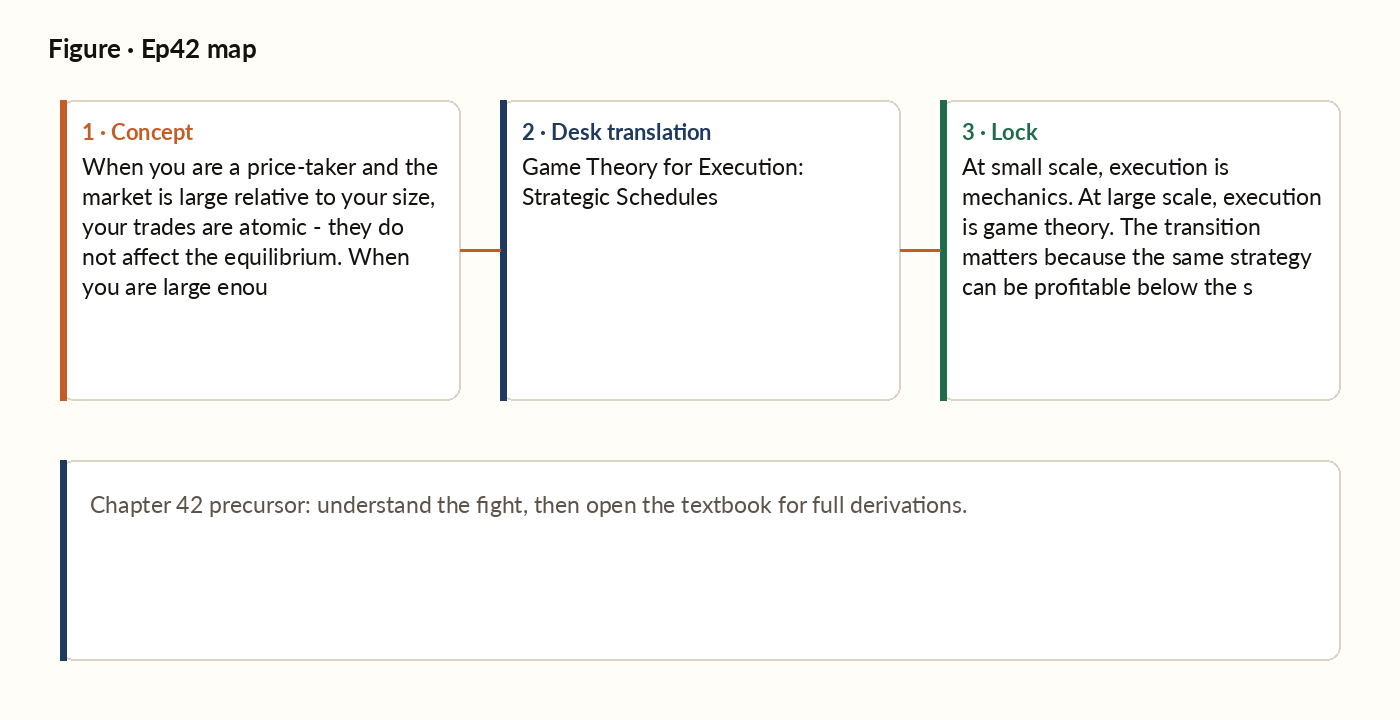
Figure 1. Concept map for this episode: fight, desk translation, what to lock.
The strategic execution problem
Consider two large traders who both want to liquidate a position over the same trading day. If trader A trades fast, trader A pays a lot of impact but pushes the price against trader B. If trader A trades slow, trader A pays less impact but risks adverse price movement during the day. If trader B follows the same logic, the two traders are playing a simultaneous game. The classical solution concept is the Nash equilibrium: a pair of strategies where neither trader can improve by deviating unilaterally. For symmetric traders with the same target, the Nash equilibrium is for both to trade at the same rate - exactly the Almgren-Chriss optimal schedule from Chapter 30, now re-derived as an equilibrium rather than assumed as a solo optimum.
The implications for systematic trading
For a typical sub-institutional systematic trader, the takeaways from this literature are operational rather than mathematical: 1. Do not commit to a fixed schedule. Adaptive schedules that respond to realised market conditions outperform rigid ones. A schedule that responds to today's actual spread, today's actual depth, and today's actual price action will collect more alpha than one that pre-commits.
When game theory matters most
For most working trading systems, the deeper game-theoretic results are interesting but not directly actionable - they apply most strongly to participants whose order flow is large enough to move markets. For sub-institutional sizes, the simpler operational rules of §42.2 capture most of the available benefit. Game theory becomes critical at scale. Once a strategy is large enough that its trades create observable patterns - that is, when other algorithms can detect "the same fund is buying again at 10:30 every morning" - the strategy is in a competitive game and must adopt game-theoretic defences: randomised schedules, venue diversification, and a willingness to trade slower than the naive optimum in exchange for staying unpredictable.
Worked picture
A rigid TWAP sells 1,000 shares in ten clips of 100 shares every five minutes. A detector front-runs each clip by $0.05 per share - a cumulative $50 implementation tax across the order. Randomise clip sizes by ±20% and intervals by ±15% so the mean schedule is unchanged but the rhythm is unpredictable. If front-run success falls from ten predictable events to three, expected tax drops to $15 - same alpha, different game.
What breaks in production
A simple Time-Weighted Average Price schedule trades equal-sized clips at equal time intervals through the execution window. It is the default in many trading systems because it is simple and easy to implement. The problem: TWAP is perfectly predictable. Other algorithms can detect a TWAP schedule from its rhythm and front-run each subsequent clip. The cumulative cost of being front-run can be substantial for repeated, large orders. The fix: add noise. Vary the clip sizes by ±20%, vary the inter-clip intervals by ±15%, occasionally skip a clip and double the next. Even modest randomisation defeats most pattern-detection algorithms while preserving the average-price properties of TWAP. The slightly more sophisticated VWAP (volume-weighted) is also better than TWAP because real volume is itself somewhat unpredictable.
Key idea
At small scale, execution is mechanics. At large scale, execution is game theory. The transition matters because the same strategy can be profitable below the scale threshold and unprofitable above it - purely because of how other algorithms react to predictable order flow. The defenses are simple in principle (randomise schedules, diversify venues, use limit orders) but disciplined application requires recognising that you have crossed the threshold and that the rules of execution have changed.