Suppose you have two features - say, momentum and relative strength versus sector. These are correlated - both capture aspects of "this stock is moving fast." If you naively combine them by just adding them together with fixed weights, you are double-counting the part of the information that both features share. The fix: treat one as the base feature, then regress the second on the first and keep only the leftover part it doesn't explain. That leftover - the residual - is by construction uncorrelated with the base feature, so combining them has no double-counting.
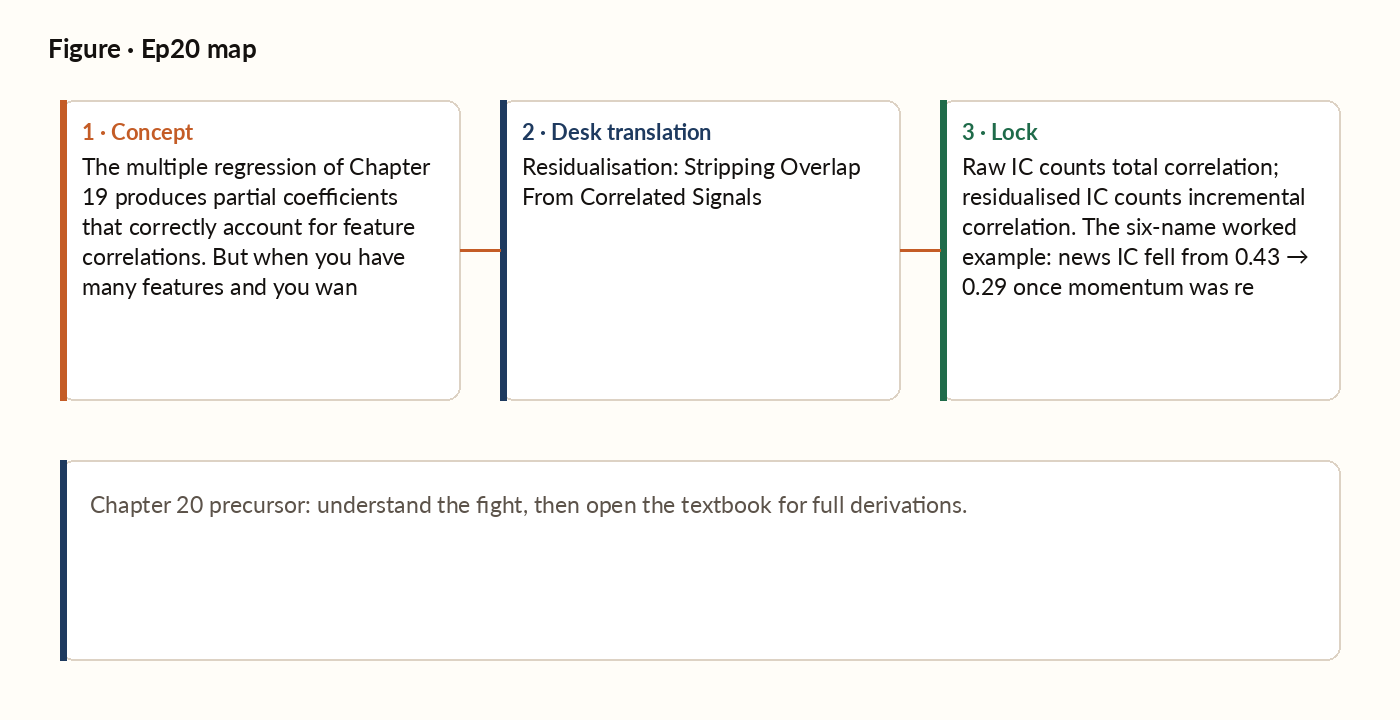
Figure 1. Concept map for this episode: fight, desk translation, what to lock.
The intuition
Suppose you have two features - say, momentum and relative strength versus sector. These are correlated - both capture aspects of "this stock is moving fast." If you naively combine them by just adding them together with fixed weights, you are double-counting the part of the information that both features share.
The iterative procedure
With many features, the same idea repeats: keep the first feature as is, then for each feature after that, regress it on all the features processed so far and keep only the residual - the part not already explained. Do this all the way down the list, in order from strongest feature to weakest, and every resulting feature is mutually uncorrelated with all the others.
The eleven-step alpha combination engine — detailed logic and worked mechanics
A complete production alpha combination pipeline expands the basic residualisation idea into a disciplined eleven-step procedure: clean point-in-time feature computation, outlier capping, cross-sectional standardisation, ranking features by individual strength, iterative residualisation in that order, and a final shrinkage step that keeps the combined forecast stable rather than chasing noise. Each step exists because real market data contains multiple, interacting biases that will otherwise leak into the final prior and corrupt expected-value calculations downstream. The goal of the entire engine is to produce a single composite forecast (sometimes called a combined prior) whose strength is as close as possible to what you'd get by adding up each feature's incremental contribution, while remaining stable enough that the downstream position-sizing does not over-react to noise.
The deeper principle
Residualisation is the technical implementation of a deep principle in alpha combination: each feature's contribution should be its incremental information, not its total information. Naive equal-weighting ignores correlation and over-weights duplicate features. Naive significance-weighting (using simple ICs) ignores correlation and over-counts shared information. Residualisation forces a clean accounting: the composite alpha is a sum over the orthogonal components of each feature. The total information is bounded by the sum of squared orthogonal contributions - the right multivariate generalisation of "information adds in quadrature."
Worked picture
Step 7's forward expected signal strength need not use a fixed rolling window grid (which invites parameter overfitting, Chapter 32). A disciplined desk applies a one-dimensional Kalman filter to each signal's recent IC tail - the filter smooths noise without choosing a magic window length. Residual-combination weights still require labeled n of at least 20 before promotion into the live scorecard. A separate local trend Kalman (two-dimensional state: log-price level + slope) can feed a shadow feature until walk-forward labeled IC earns promotion - tuned on entry-date outcomes, not by fitting returns alone inside the sample.
Chapter 20 — the picture closes
Raw IC counts total correlation; residualised IC counts incremental correlation. In a six-name worked example, the news feature's IC fell from 0.66 to 0.37 once its overlap with momentum was removed - honest marginal credit, not duplicate momentum. The alpha combination engine operationalises that algebra: orthogonal features, shrunk weights, a single prior feeding the scorecard. Residualisation is not a preprocessing nicety; it is the difference between breadth and illusion of breadth.